
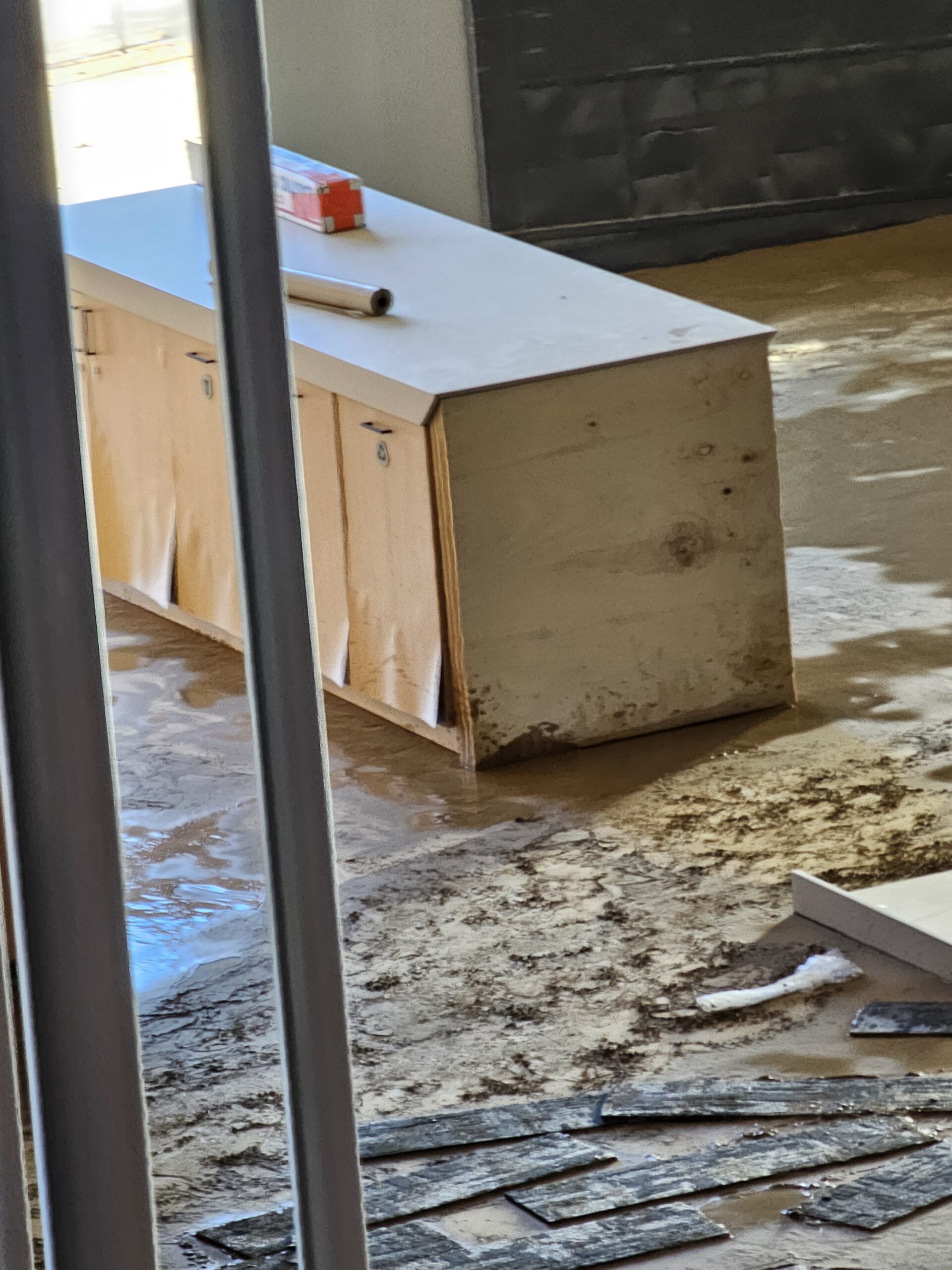
Water in an office is one of those problems that gets worse by the hour. A burst pipe over a weekend, a failed water heater, a roof leak during a spring storm, or a sprinkler line that lets go can soak carpet across a whole floor before anyone notices. When it happens, most people focus on the water. That is the right instinct, but the furniture sitting in that water deserves attention early too.
This post covers what generally happens with office furniture in the first 48 hours after a leak or flood, and how to keep the damage from spreading. It is general guidance, not a substitute for your building’s emergency procedures or your insurance company’s direction.
First, safety and the basics
Before anyone starts moving desks, make sure the area is safe. Water and electricity do not mix, and powered workstations sitting in standing water are a real hazard. Follow your building’s procedures, let property management know, and let qualified people deal with the water source and any electrical concerns. Take photos of the damage before things get moved, since your insurance company will want to see the conditions as you found them.
Why furniture can’t wait
Restoration crews need access to the floor to extract water and dry carpet properly. Cubicles and desks sitting on wet carpet block that work, and they can hold moisture underneath them. Systems furniture can act a lot like a sponge on a wet floor.
The furniture itself is also at risk. Fabric panels can wick up water, and particle board cores in work surfaces and storage can swell and be ruined within hours. Metal components can start to rust. The longer furniture stays in a wet, humid room, the less of it you are likely to save.
The first 48 hours
Get the water out. Extracting standing water, mapping where the moisture has spread, and setting up dehumidifiers and air movers is the first priority. MORE’s disaster mitigation service includes water extraction, moisture mapping, and industrial drying equipment to help prevent mold and secondary damage.
Clear the floor. Workstations, desks, and demountable walls need to come out of the affected area so the floor can dry. This is where an experienced installer makes a difference. Modular furniture taken apart by people who do not know the system can end up with broken connectors and missing parts that are needed for the rebuild. Our crews are trained on major brands like Steelcase and Herman Miller and know how to disassemble them without losing the pieces you will need later.
Handle electronics carefully. Computers, monitors, and other equipment at the affected desks should be moved out carefully and kept with their stations when possible, so setup goes smoothly later.
Get furniture into a dry environment. Moving furniture to another part of the building may not be enough if the air is still humid. MORE can shrink-wrap salvageable furniture and move it to our climate-controlled 27,000 square foot warehouse, where it can be cleaned and dried in a controlled environment to help prevent further rust, swelling, or mold growth while your building is restored.
What can be saved, and what can’t
Not everything that got wet is a loss. Fabric panels and seating with minor exposure can often be professionally cleaned and put back into service. Other pieces, especially those with swollen particle board, may not be worth saving.
We can work with insurance adjusters to assess water-damaged furniture and sort out what is salvageable. For items that are not, we provide detailed inventory reports and waste tickets to both you and the insurance company, which helps the claim move along so replacements can be ordered. If old pieces need to go, our guide to office furniture decommissioning covers how that is handled.
Repairing the space
Once the water is out and the floor is clear, the building itself often needs work: wet drywall removed and replaced, ceiling tiles and grid repaired, and walls repainted. MORE handles drywall, acoustic ceiling, and commercial painting repairs as part of our mitigation work, so you are not left juggling separate contractors for every step.
Putting the office back together
When the building is confirmed dry and repairs are done, the furniture comes back. Since it has been tracked and stored, we can reinstall your layout the way it was. Or, if the flood made you rethink the space, this can be a natural time to change it. More on that on our workstation reconfiguration page. Details on the full process are on our emergency restoration services page.
A short checklist to keep on file
- Know where your water shutoffs are and who to call at property management.
- Keep your insurance contact information somewhere easy to find.
- Photograph damage before moving anything.
- Get furniture off wet floors as early as it is safe to do so.
- Keep a list of what was moved, where it went, and what condition it was in.
If your office takes on water
We hope you never need this, but if you do, MORE can help with water extraction, furniture teardown and removal, storage and drying, repairs, and reinstall. Save our number somewhere your facilities team can find it.
Call 303.371.4049 or send us a message.